Short answer
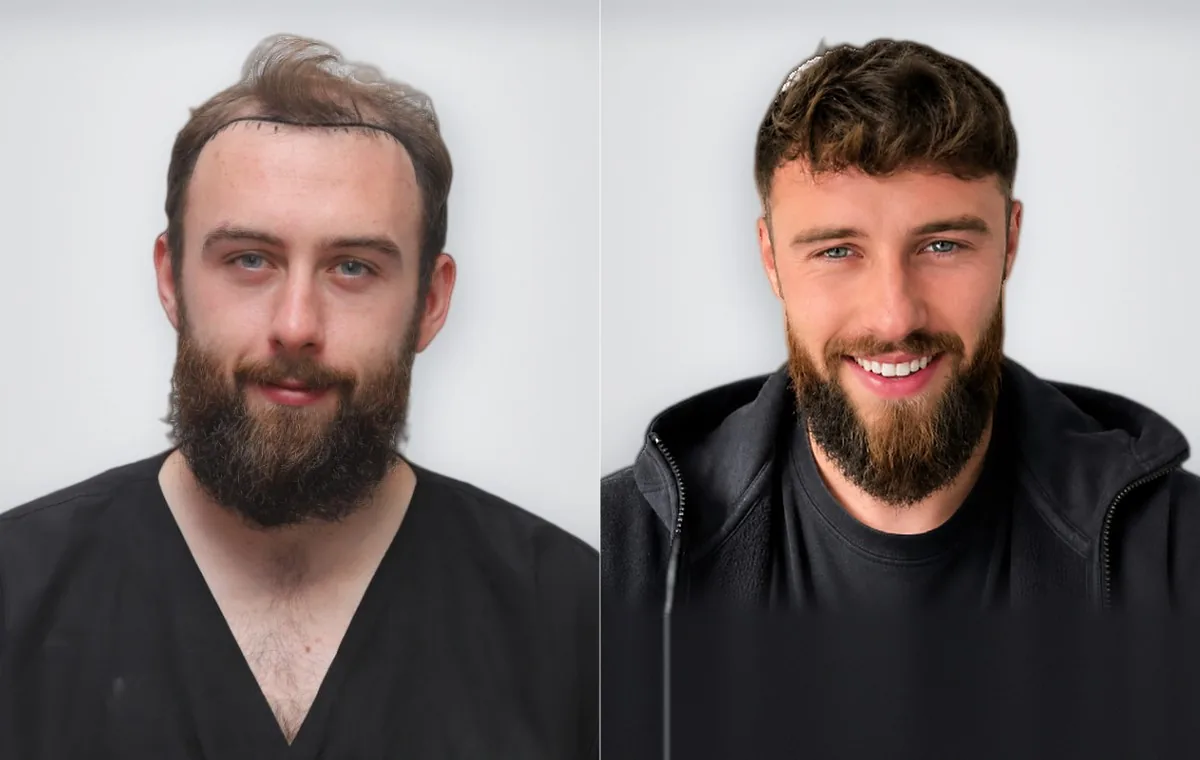
Before and after photos are most useful when they show the same person in the same light, angle and hair length, with the technique, graft number and months since surgery clearly stated. Real Metropolmed patients such as Daniel Coffman (5,250 grafts, 12 months) and Faubert Joseph (Afro hair, 3,490 grafts, 12 months) show how results build over time. Individual results vary, and a doctor assesses each case.
Key takeaways
- A fair before/after comparison shows the same angle, lighting, hair length and a clear follow-up time.
- Results shown at 6–9 months are usually still improving; 12 months or later is closer to final.
- Graft numbers in real cases range widely, from about 2,600 to 5,250 in the stories below.
- Men, women and Afro hair patients can all be suitable, but the plan differs for each.
- Your own result depends on your donor area, hair type and health, assessed by a doctor.
Why do real patient journeys matter?
A single dramatic photo says little. A patient journey shows the starting point, the plan, the healing stage and the result months later. That helps you understand what is realistic for someone with a similar pattern of hair loss.
The cases below are real Metropolmed patients whose stories are published with their consent on our Patient Stories page. Each was planned and performed by our own medical team in Istanbul.
Real Metropolmed patient journeys at a glance
This table summarises a selection of cases. Follow-up time means how long after surgery the 'after' photos were taken.
| Patient | Technique | Grafts | Follow-up |
|---|---|---|---|
| Daniel Coffman | Hybrid Sapphire FUE + DHI | 5,250 | 12 months |
| Sean Deverill | Sapphire FUE | 4,500 | 14 months |
| Lucas Santana Soave | Sapphire FUE | 5,000 | 14 months |
| Faubert Joseph (Afro hair) | Sapphire FUE | 3,490 | 12 months |
| Tibor Janoska | DHI | 4,500 | 12 months |
| Sinan Sinay | Hybrid Sapphire FUE + DHI | 3,650 | 7 months |
| Hoyam Aity | Sapphire FUE | 4,850 | 9 months |
| Roza Agibayeva (woman) | Sapphire FUE | 4,000 | 7 months |
| Janet Mai Sawyer (woman) | Sapphire FUE | 3,000 | 8 months |
| Irina Shirley (woman) | Sapphire FUE | 2,600 | 11 months |
| Thomas Deleuze Guitteaud | Sapphire FUE | 3,825 | 1 year |
| Jaroslaw Traczynska | Sapphire FUE | 3,750 | 9 months |
Larger sessions with long follow-up
Daniel Coffman received 5,250 grafts with the Hybrid technique (Sapphire FUE + DHI), and his photos at 12 months show a rebuilt hairline and frontal area. Lucas Santana Soave had 5,000 grafts and was followed up at 14 months, which is a good stage for judging density.
Sean Deverill had 4,500 grafts with a 14-month follow-up. These three cases show what larger sessions can achieve when the donor area allows it. Not everyone has enough donor hair for this number of grafts. The donor area is limited, so a doctor checks its density before suggesting a graft number. Tibor Janoska is another example in this range, with 4,500 grafts followed up at 12 months.
Afro hair, hybrid technique and earlier checkpoints
Faubert Joseph is an Afro hair patient who had 3,490 grafts. Curly hair needs careful extraction because the follicle curves under the skin, but once grown it can give strong visual coverage per graft.
Sinan Sinay had a hybrid procedure combining Sapphire FUE and DHI with 3,650 grafts, shown at 7 months. At that stage hair is still thickening, so his result is likely to keep improving. This is an important reminder: always check the follow-up time before comparing photos.
Women's hair transplant journeys
Female hair loss often looks different from male pattern loss, with thinning along the parting or a high hairline. Roza Agibayeva had 4,000 grafts (7 months), Janet Mai Sawyer had 3,000 grafts (8 months) and Irina Shirley had 2,600 grafts (11 months). Each plan was based on the cause and pattern of her hair loss. Women usually keep their existing hair, so the work is often done between native hairs to add density without changing the overall style.
How do you read before and after photos honestly?
Good photos make comparison fair. Poor photos can make any result look better or worse than it is. Use this checklist when you look at any clinic's results:
- Same angles: front, top, both sides and crown, before and after.
- Similar lighting: strong overhead light makes thin hair look thinner, soft light hides gaps.
- Similar hair length and styling: wet or very short hair shows the scalp more.
- A stated follow-up time: a 6-month photo is not a final result.
- Technique and graft number stated: this tells you what was actually done.
- No heavy filters, fibres or styling products that add apparent volume.
Why can results at the same graft number look different?
Looking at the table, you might expect two patients with 4,500 grafts to look the same. In practice they rarely do. Hair thickness, colour contrast between hair and skin, curl and the size of the bald area all change how full the result appears.
For example, thick or curly hair covers more scalp per graft, while fine, straight hair on a light scalp needs more density to look the same. The area treated also matters: grafts spread over the front and crown give less density per square centimetre than the same number used on the front alone. This is why graft numbers alone are not a fair way to compare clinics or results.
What can you realistically expect?
Your result depends on your donor area, hair thickness and colour, the size of the thinning area, your age and your health. Two people with the same graft number can look different afterwards. That is why a doctor reviews your photos before any plan is made.
When comparing timing, our hair growth timeline explains what is normal at each month. At Metropolmed, our own doctors carry out every procedure, and our team arranges hotel, transfer and interpreter support for international patients. A free online assessment gives you an honest view of what is achievable in your case.
Frequently asked questions
How long after a hair transplant are before and after photos meaningful?
Photos from 12 months onwards are closest to the final result. Photos at 6–9 months show progress, but hair is usually still thickening.
Are the patient stories on Metropolmed real?
Yes. The patient stories are real Metropolmed patients treated by the clinic's own team, published with their consent.
Why do before and after results look so different between patients?
Results depend on donor density, hair type, the area treated, graft number, age and health. Each plan is individual.
Can women get similar results to men?
Many women can benefit from a hair transplant, but suitability depends on the cause and pattern of hair loss. A doctor assesses this first.
How many grafts do I need to look like these patients?
It depends on your pattern of hair loss and donor area. A doctor estimates the number after reviewing your photos.
This article is general information and does not replace a medical consultation. Your doctor will give you a personal recommendation after assessing your case.