Short answer
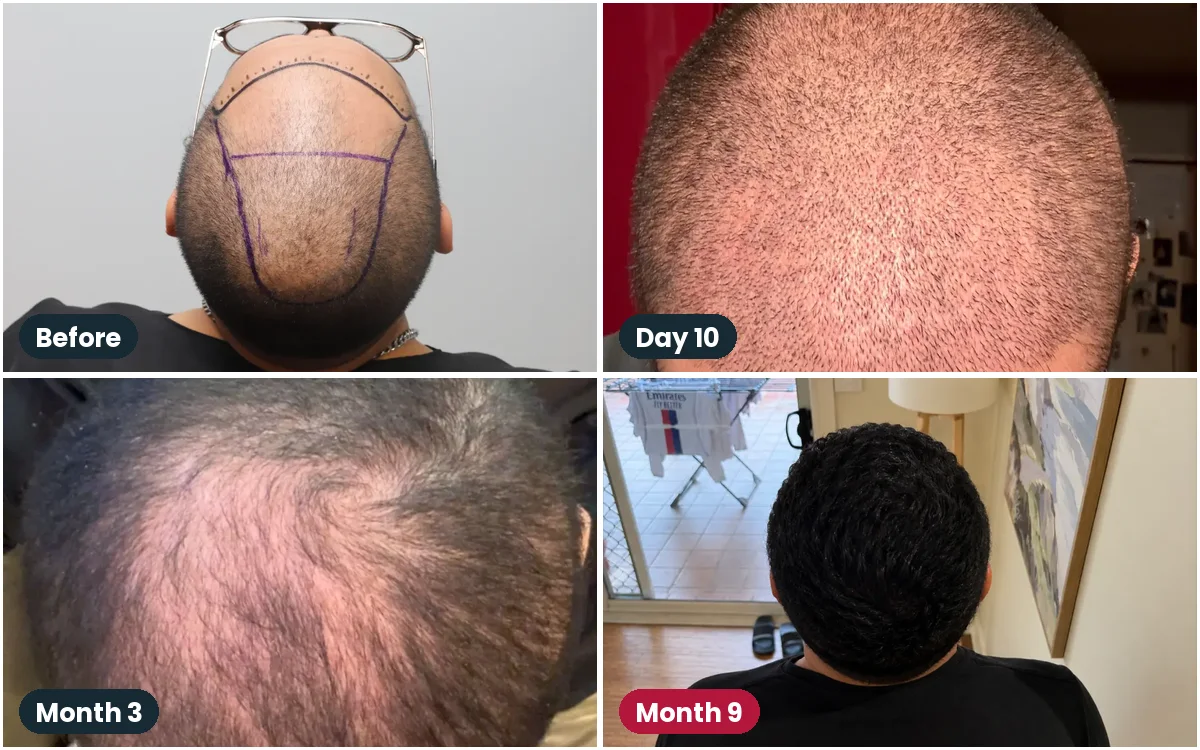
After a hair transplant, the grafts settle in the first 10 days, then most transplanted hairs usually shed between weeks 2 and 8. This is normal: the follicles stay in place and rest. New hair typically starts to appear in months 3–4, looks clearly fuller by month 6, and matures between months 12 and 18. The crown and very dense areas often take the longest. Your doctor reviews your progress at each stage.
Key takeaways
- The first 10 days are about healing: redness, small scabs and mild swelling are expected.
- Shedding of transplanted hairs between weeks 2 and 8 is normal and does not mean the grafts have failed.
- New growth usually begins in months 3–4 and is often fine and thin at first.
- Month 6 is a useful checkpoint, but it is not the final result.
- Most patients see their final density and texture between 12 and 18 months, with the crown often last.
Why does hair grow back in stages?
Every hair follicle moves through a cycle of growth, rest and shedding. During a transplant, follicles are moved from the donor area at the back of the head to the thinning area. That move is a small shock, so most follicles enter a resting phase before they start a new growth cycle.
This is why the result does not appear overnight. The follicle is alive under the skin, but the visible hair shaft often falls out first. Understanding this cycle helps you stay calm during the months when the mirror shows little change. The same timeline applies to every main technique, including Sapphire FUE and DHI, although small differences in healing speed are possible.
Month-by-month hair growth timeline
The table below shows a typical timeline. It is a general guide, not a promise. Your age, hair type, health, number of grafts and how closely you follow aftercare can all move these dates a little earlier or later.
| Stage | What usually happens | What you can do |
|---|---|---|
| Days 1–10 | Grafts anchor in the skin. Redness, small crusts and some forehead swelling are common. Scabs usually loosen by days 7–10. | Follow the washing routine, sleep slightly upright, avoid touching or scratching. |
| Weeks 2–8 | Most transplanted hairs shed (often called shock loss). Some nearby native hairs may thin temporarily. | Stay patient. Shedding is expected. Keep up gentle washing and any recommended products. |
| Months 3–4 | First new hairs appear. They are often fine, thin and sometimes uneven. Mild pimples can appear as hairs break through. | Report any painful or persistent spots to your doctor. Avoid judging the result yet. |
| Month 6 | Visible improvement. Many patients notice a clearly fuller hairline, although density is still building. | Send progress photos for a follow-up review. |
| Month 9 | Hair becomes thicker and more natural in texture. Styling becomes easier. | Compare photos in the same light and angle as your 'before' set. |
| Months 12–18 | Final density and texture are usually reached. The crown and high-density zones may need the full 18 months. | Final assessment with your doctor. Discuss any further steps only after this point. |
What happens in the first 10 days?
The first days are about protecting the grafts while they anchor. You may notice redness, tiny crusts around each graft and mild swelling on the forehead around days 3–5. Most of this settles on its own.
The clinic usually performs or guides the first wash, then you continue at home with a gentle routine. By days 7–10 the small scabs normally soften and come away. Our detailed guide to hair transplant recovery explains washing, sleeping and activity rules for this period day by day.
Is shedding after a hair transplant normal?
Yes. Between weeks 2 and 8, most of the transplanted hairs usually fall out. Many patients find this the hardest part emotionally, because the head can look much like it did before surgery.
The important point is that the follicle stays in the skin. Only the hair shaft is shed. Some patients also notice temporary thinning of their own hair around the treated area. This usually recovers within a few months. If shedding worries you, send photos to your doctor rather than guessing from online forums.
When will I see results?
New hairs usually start to break through in months 3–4. They tend to be thin and light at first, and they do not all grow at the same pace. By month 6 many people see a real change in their hairline, which is why it is a common follow-up checkpoint.
Between months 9 and 12 the hairs thicken, darken to their natural shade and become easier to style. Most patients reach their final result between 12 and 18 months. The crown often takes longer than the front because hair there grows in a swirl and needs more density to look full. You can see how this looks in real cases on our Patient Stories page, for example Daniel Coffman at 12 months and Sean Deverill at 14 months.
What can affect the speed of growth?
No two patients grow at exactly the same speed. These are the most common factors a doctor considers:
- Hair characteristics: thicker or curly hair can look fuller sooner.
- Number of grafts and the size of the area covered.
- General health, smoking and certain medications.
- How well aftercare instructions are followed in the first two weeks.
- Supporting treatments such as PRP, which some doctors recommend during recovery.
How does Metropolmed follow your progress?
At Metropolmed, our own doctors perform the procedure in our licensed clinic in Istanbul, and the care continues after you fly home. Packages include a 1-year follow-up: you share photos at key stages and the medical team reviews them. Supportive sessions such as PRP and laser hair therapy are part of the hair packages and may help the scalp recover.
If you are still planning your procedure, start with an overview of hair transplant at Metropolmed. A free online assessment from your photos gives you a personal plan, with an honest view of what your timeline is likely to look like.
Frequently asked questions
When does hair start growing after a transplant?
New hairs usually begin to appear in months 3–4. They are often fine at first and thicken over the following months.
Why is my transplanted hair falling out after 3 weeks?
Shedding between weeks 2 and 8 is a normal part of the cycle. The follicle remains in the skin and typically starts a new growth phase a few months later.
How long until I see the final result?
Most patients see their final result between 12 and 18 months. The crown and very dense areas can take the full 18 months.
Is month 6 the final result?
No. Month 6 is a useful checkpoint where many people see clear improvement, but density and texture usually keep improving until at least month 12.
Can I speed up hair growth after a transplant?
Growth follows a natural cycle that cannot be rushed much. Following aftercare carefully, not smoking and any treatments your doctor recommends, such as PRP, support healthy growth.
This article is general information and does not replace a medical consultation. Your doctor will give you a personal recommendation after assessing your case.