Short answer
An eyebrow transplant moves single hair follicles from the back of the scalp to the eyebrows to rebuild shape and density. It usually takes 2 to 4 hours under local anaesthesia, needs 2 to 3 days in Istanbul, and most people return to normal social life within 5 to 7 days, with the final result at around 9 to 12 months.
What is an eyebrow transplant?
An eyebrow transplant is a precise hair transplant to the brows. Single-hair grafts are taken from the back of the scalp and placed one by one, following the flat angle and direction of natural brow hair.
Because the hair is your own, it grows like natural hair and can be shaped and trimmed.
Who is it for?
It suits women and men with thin, sparse or missing brows and a healthy scalp donor area.
- Over-plucked or over-waxed brows
- Sparse brows from genetics or ageing
- Gaps from scars or injury
- Brows that have not recovered after tattooing or microblading
- People who want a fuller, defined shape
How the procedure is done
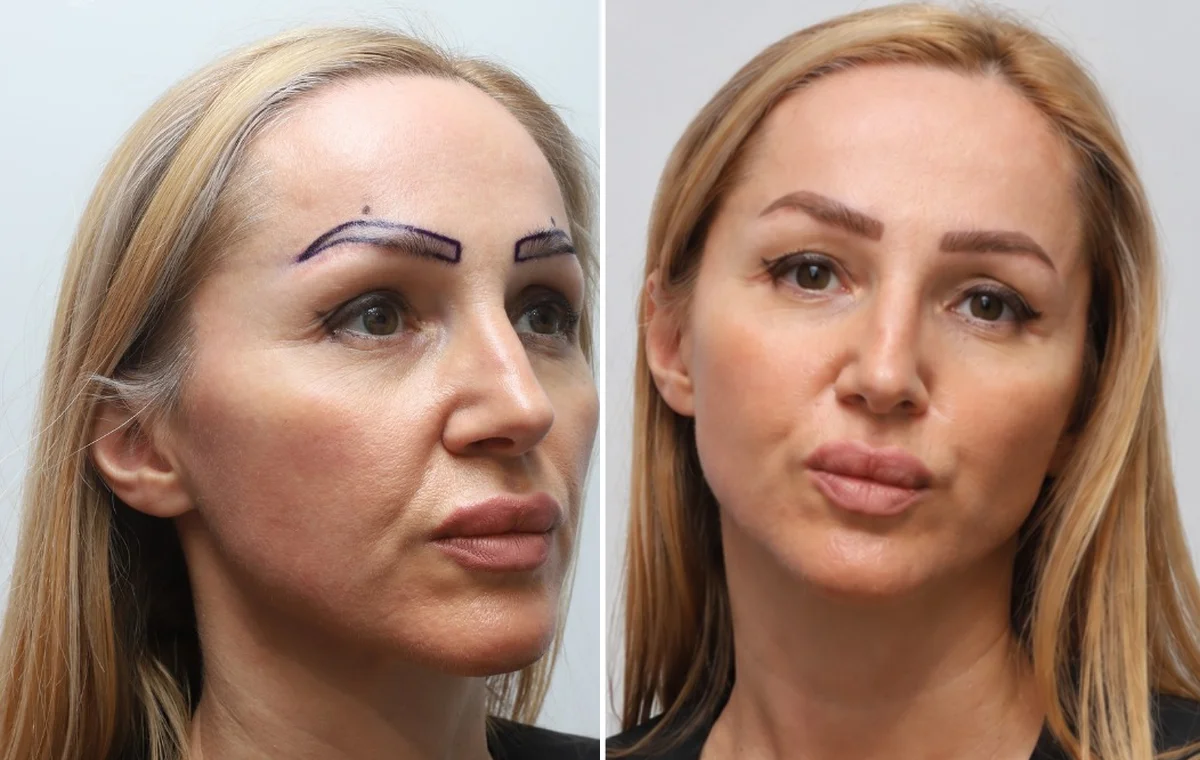
You draw the brow shape with the doctor first, so it suits your face. A small area at the back of the scalp is trimmed, grafts are extracted, and single hairs are placed very close to the skin at a flat angle for a natural look.
Most patients need 2 to 3 days in Istanbul. Your hotel, VIP transfers and a medical interpreter are arranged before you land, and a personal coordinator stays in touch from your first message to your 12-month check-up.
Designing the brow shape
The brow shape is planned before anything else. Your doctor looks at your face proportions, eye shape and any remaining brow hair, and you agree the outline together in front of a mirror.
Hairs at the inner brow point more upwards, while those in the body and tail lie flatter and point outwards. Placing each graft in the right direction is what makes transplanted brows look natural rather than drawn on.
Grafts are placed at a realistic density, because overly dense brows can look heavy. A second session can add density later if you want it.
Recovery and results
Small redness and tiny crusts appear around the brows for about a week, and most people return to normal social life within 5 to 7 days. The transplanted hairs usually shed in the first weeks, regrow from around month 3, and the final result shows at 9 to 12 months.
For the first few days, keep the brows dry, avoid make-up on the treated area and sleep on your back. You can usually return to light make-up around the brows after about a week.
Follow-up continues after you fly home. You send progress photos to your coordinator at set points over the next 12 months, and the medical team reviews them and answers your questions.
Risks and safety
Mild swelling around the eyes is common for a few days. Uneven growth, ingrown hairs or a direction that needs fine-tuning are possible, and a small touch-up session is sometimes advised. A doctor assesses your brows and donor area in person, and medical causes of brow loss are checked first.
Recovery timeline
- Day 1-3Mild redness and swelling around the brows and eyes.
- Day 5-7Tiny crusts fall away; back to normal social life.
- Week 2-6Most transplanted hairs shed. This is expected.
- Month 3-4New brow hair starts to grow.
- Month 9-12Final shape and density.
Frequently asked questions
How many grafts are needed for eyebrows?
Typically 150 to 300 grafts per eyebrow, depending on how much shape and density you want.
Will transplanted eyebrow hair need trimming?
Yes. The hair comes from the scalp and keeps its growth pattern, so you trim it every one to two weeks, just like styling your natural brows.
How visible is the recovery?
Small redness and tiny crusts around the brows for about a week. Most people return to normal social life within 5 to 7 days.
Can I have an eyebrow transplant after microblading?
Usually yes, once the skin has healed. Tell us about any tattooing so the doctor can plan placement around it.