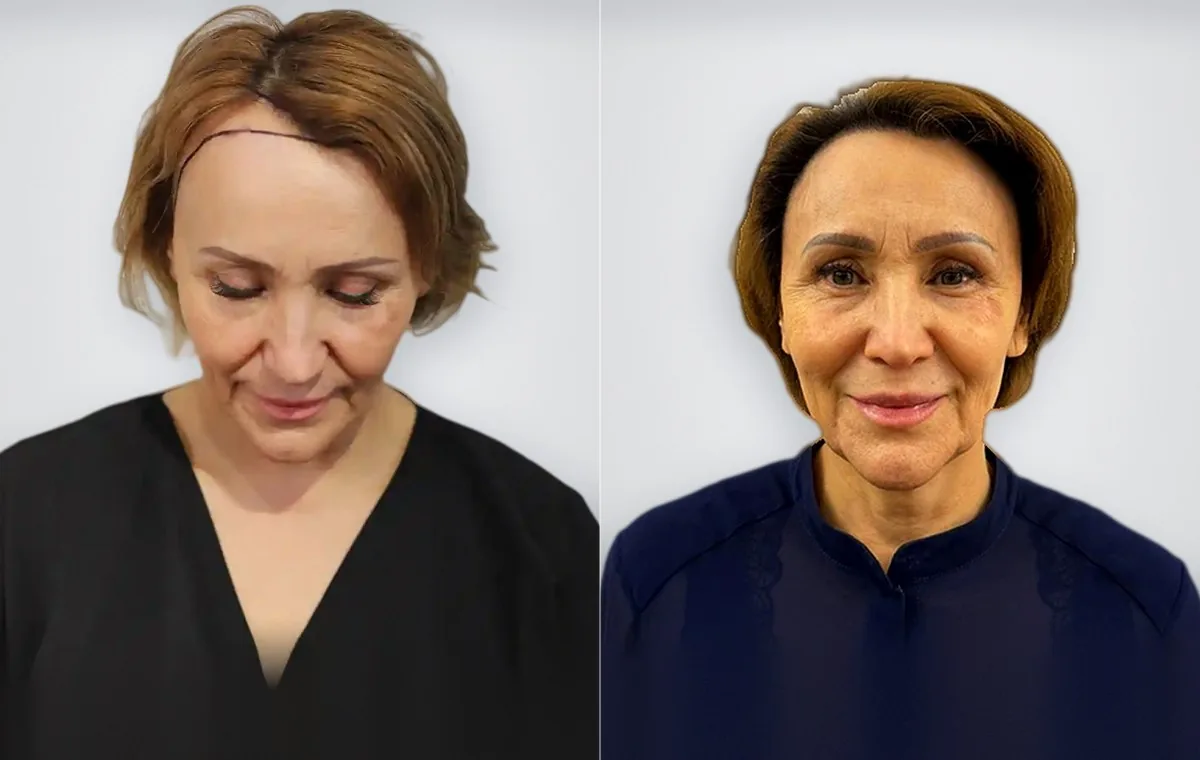
Short answer
A women's hair transplant moves permanent follicles from the back of the scalp to a defined area of thinning, such as a high hairline, thin temples or a widening parting. It usually takes 5 to 7 hours under local anaesthesia, often without shaving, and most women stay in Istanbul for 3 days and return to normal life within a week.
What is a women's hair transplant?
A women's hair transplant is a hair transplant planned around the different way women lose hair. Men usually lose hair in a predictable pattern, while women more often have a high hairline, thinning at the temples or a widening parting.
Grafts are taken from the back of the scalp and placed one by one. We often use unshaven DHI, so your existing hair stays long and the procedure is hard to notice.
Who is it for?
Women are good candidates when hair loss is concentrated in an area and the donor area is stable. Diffuse thinning across the whole scalp is assessed with blood tests first, because it often has a medical cause that should be treated before surgery.
- High or uneven hairline, including hairline lowering
- Thin temples or recession at the sides
- Traction alopecia from tight hairstyles
- Scarring after injury or cosmetic surgery
- A widening parting with a stable donor area
Tests before your procedure
Alongside standard pre-operative blood work, we check values that commonly affect female hair loss, such as ferritin (iron stores), thyroid function, vitamin D and, where relevant, hormones. Treating these first protects your result and your native hair.
How the procedure is done
Your new hairline or density plan is designed with you on the day, following your natural face proportions. A small strip at the back is trimmed where needed and stays hidden under long hair, then grafts are placed between your existing hairs with a DHI pen.
Most women need 3 days in Istanbul. Your hotel, VIP transfers and a medical interpreter are arranged before you land, and a personal coordinator stays in touch from your first message to your 12-month check-up.
Women often prefer a softer, slightly irregular hairline with fine single-hair grafts at the front, because a straight or dense edge can look unnatural. Your doctor plans the density so that it blends with your existing hair and keeps enough donor reserve for the future.
Recovery and results
Most women return to work and social life within 3 to 7 days, and long hair covers the treated areas well. Transplanted hairs usually shed between weeks 2 and 8, new growth starts around month 3, and the final result shows at 12 to 18 months. PRP is often recommended to support your existing hair.
Be gentle with your hair in the first weeks: avoid tight ponytails, hair extensions, heat styling on the treated area and chemical treatments until your doctor confirms healing at your check-up.
Risks and safety
Temporary swelling, redness and itching are common. Shock loss of nearby native hair can happen in women and usually recovers within a few months. Infection and patchy growth are uncommon. A doctor assesses your suitability in person, and if your hair loss is not suited to a transplant, we will tell you.
Recovery timeline
- Day 1-3Mild swelling and tenderness; first professional wash at the clinic before you fly home.
- Day 10-14Small crusts fall away and the donor area looks almost normal.
- Week 2-8Most transplanted hairs shed. This is expected and the follicles stay in place.
- Month 3-4New, fine hair starts to grow through.
- Month 6A clear change in coverage is visible.
- Month 12-18Final result as the new hair thickens and matures.
Frequently asked questions
Can women have a hair transplant?
Yes. Women are good candidates when hair loss is concentrated in an area, such as a high hairline, thin temples, a widening parting or traction alopecia, and the donor area is stable. Diffuse thinning is assessed with blood tests first.
Do women need to shave their head?
Usually not. We often use unshaven DHI or a small shaved strip at the back that stays hidden under long hair, so nobody sees you have had a procedure.
Which tests are done before a women's hair transplant?
Alongside standard blood work, we check ferritin, thyroid function, vitamin D and, where relevant, hormones. Treating these first protects your result.
Can a hair transplant lower my hairline?
Yes. Hairline lowering by grafting is one of the most common requests from women. The new hairline is designed with you on the day, following your natural face proportions.
Can I colour my hair after the procedure?
Usually after about 4 weeks, once the scalp has fully healed. Your doctor confirms the timing at your check-up.