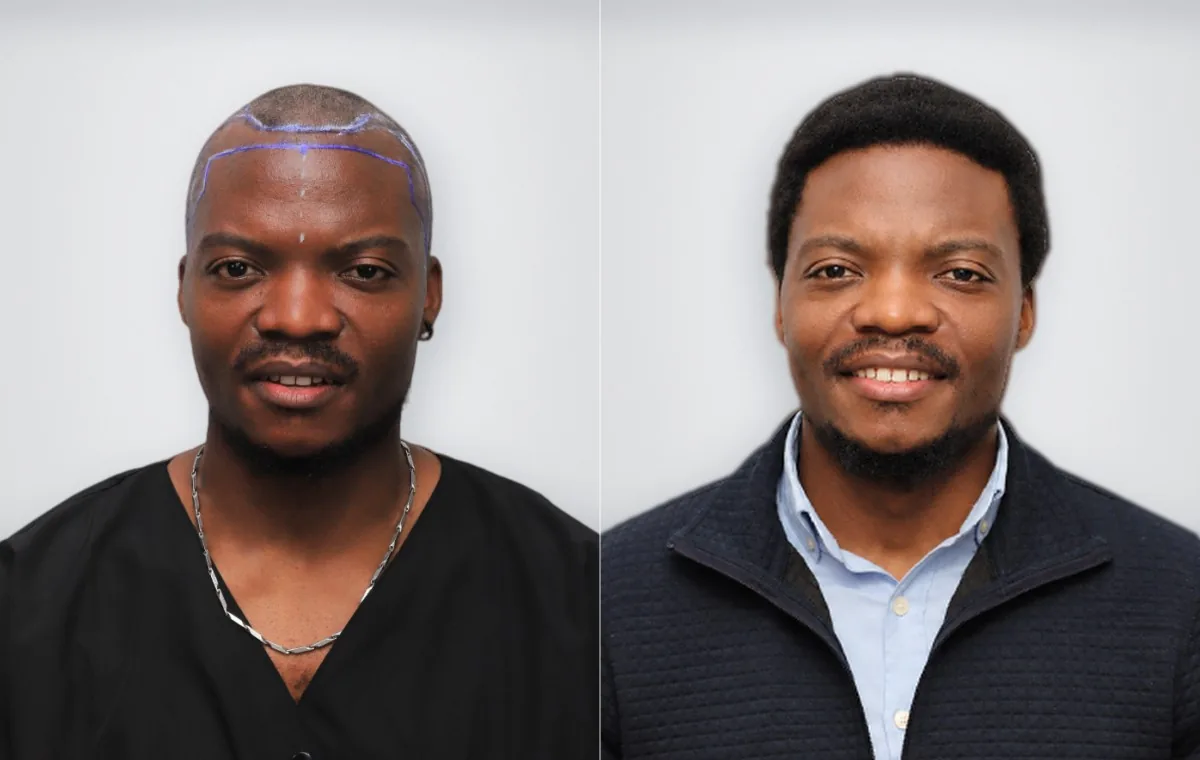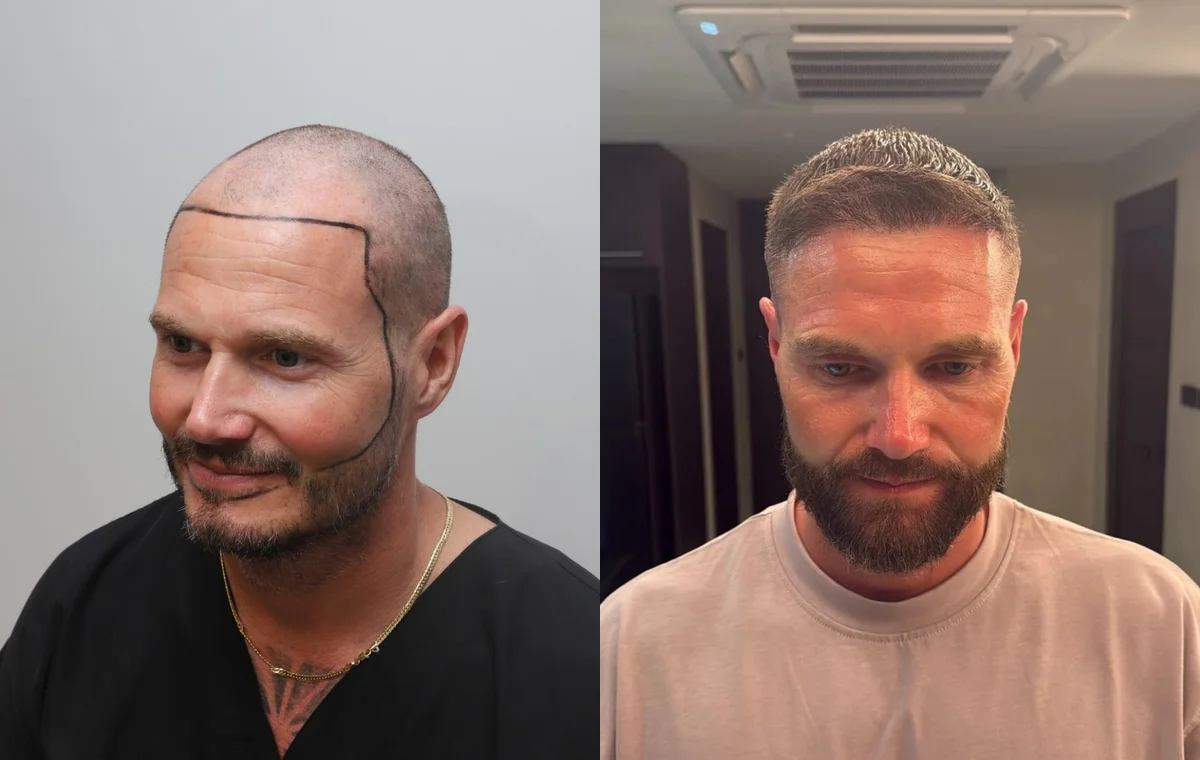
Short answer
A beard transplant moves hair follicles, usually from the back of the scalp, to the beard area to fill gaps, increase density or create a fuller shape. Transplanted beard hair grows, can be shaved and trimmed, and is generally long-lasting. The final result is usually visible after about 9 to 12 months.
Key takeaways
- Beard transplants can fill patches, improve density and shape the cheek line, moustache and goatee.
- Grafts usually come from the back of the scalp.
- Angle and direction are key to a natural look, because beard hair lies close to the skin.
- Transplanted hairs usually shed in the first weeks and regrow later.
- You can shave and trim the new beard once it has healed.
- A doctor's assessment decides the design and number of grafts.
Who is a beard transplant for?
A beard transplant may suit you if you have:
- a patchy beard that never filled in
- thin areas on the cheeks, moustache or chin
- a beard that does not connect between moustache and chin
- scars in the beard area where hair does not grow
- a wish for a sharper, more defined beard shape
Your doctor first checks why the beard is thin. Some causes of patchy beard growth need medical treatment rather than a transplant.
How does the procedure work?
- Design: The doctor draws the beard shape with you, based on your face and the style you want.
- Donor selection: Grafts are usually taken from the back of the scalp. Single hairs are often chosen for the edges, so lines look soft and natural.
- Extraction: Follicles are removed one by one with FUE.
- Placement: Each graft is placed at a low angle and in the natural direction of beard growth, which changes across the face.
The number of grafts depends on the area. Filling small patches needs far fewer grafts than building a full beard.
Why angle and direction matter
Beard hair grows at a low angle and changes direction across the cheeks, jaw, chin and moustache. If grafts are placed too steeply or in the wrong direction, the hairs can stick out and look unnatural. Careful placement is what makes transplanted hair blend with your own beard.
Partial vs full beard transplant
| Partial (patch filling) | Full beard | |
|---|---|---|
| Typical goal | Fill gaps or thin spots | Create a complete beard |
| Number of grafts | Lower | Higher |
| Session length | Shorter | Longer |
| Donor area use | Light | More significant |
What is recovery like?
- First days: Small crusts, redness and mild swelling are normal. Avoid touching the beard area.
- Days 7 to 10: Crusts usually fall off.
- Weeks 2 to 4: Most transplanted hairs shed. This is normal.
- Months 3 to 4: New hairs start to grow.
- Months 9 to 12: The final density and shape are usually visible.
Your doctor tells you when you can shave or trim again, often after a few weeks.
Living with a transplanted beard
Transplanted beard hair comes from the scalp, so its texture may be slightly different at first. Over time, and with regular trimming, it usually blends well with your natural beard. You can style, shave and grow it like the rest of your beard.
How do you find out if it is right for you?
Start with a free online assessment. Send clear photos of your face from the front and both sides, with your beard at a short length, plus a photo of the back of your head. A doctor will tell you whether a beard transplant suits you and what result you can realistically expect.
Beard transplant with Metropolmed
Metropolmed is a health group in Türkiye offering hair transplant, plastic surgery, obesity surgery and dental treatments to international patients. With Metropolmed, every beard transplant starts with a free online assessment and a beard design planned around your face, so the shape and density look natural on you.
Frequently asked questions
Is a beard transplant permanent?
Results are generally long-lasting, because the hair comes from a donor area that is usually resistant to hair loss.
Can I shave my beard after a transplant?
Yes. Once healing is complete, you can shave and trim it as normal.
Will the transplanted hair look like beard hair?
With careful donor selection, angle and direction, it usually blends well. Texture often looks closer to beard hair over time.
Does a beard transplant leave scars?
FUE leaves very small dots in the donor area, which are usually hidden by surrounding hair. The beard area itself usually heals without visible marks.
Can I combine a beard and hair transplant?
Sometimes, but both use the same donor area. Your doctor will plan carefully so enough grafts remain for future needs.
This article is general information and does not replace a medical consultation. A doctor gives a personal recommendation after assessing your face and donor area.