Short answer
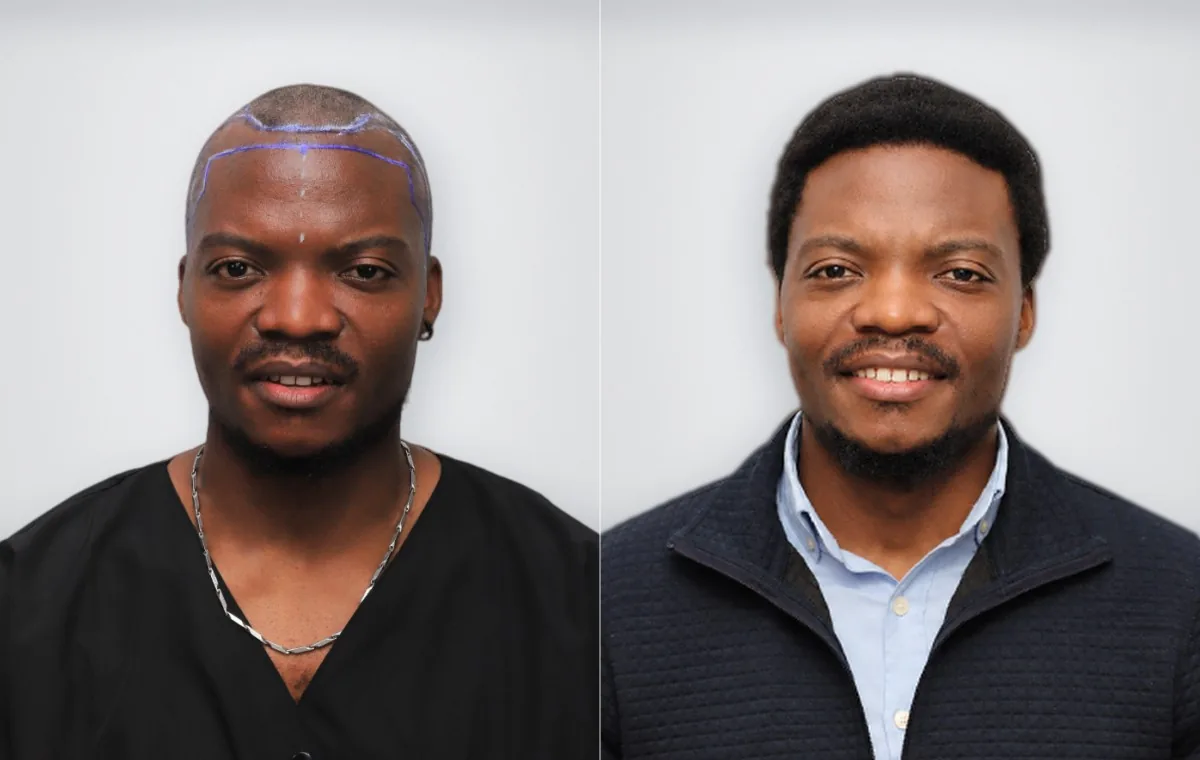
Yes, afro and very curly hair can be transplanted with excellent, natural-looking results. The procedure needs extra experience, because afro hair curls not only above the skin but also below it. With the right technique and planning, curly hair can give a fuller look with fewer grafts than straight hair.
Key takeaways
- Afro hair roots are curved under the skin, so extraction must be adapted to avoid damaging them.
- Curly hair stands away from the scalp and covers more surface, so each graft gives more visual coverage.
- Hairline design should follow the natural shape of afro hairlines, not a generic template.
- Some people with darker skin are more prone to raised scarring, so the doctor checks this before planning.
- Common causes of hair loss include genetic hair loss and traction alopecia from tight styles.
- A doctor's assessment decides the right technique and the number of grafts.
Why afro hair needs a different approach
Most hair transplant techniques were first refined on straight hair. Afro hair is different in three important ways:
- Curved roots: The curl continues under the skin. If the extraction tool follows a straight line, it can cut through the curved root. An experienced team adjusts the tool, the angle and the depth for each graft.
- Natural coverage: Each curly hair takes up more space and lifts away from the scalp. This means a smaller number of grafts can create a full look.
- Grafts are more delicate: Curved follicles are easier to damage while they are handled and placed, so careful handling matters.
What causes hair loss in afro hair?
- Genetic hair loss: The most common cause in men, usually starting at the temples, hairline or crown.
- Traction alopecia: Long-term pulling from tight braids, cornrows, weaves, extensions or locs can damage follicles, especially along the hairline and temples.
- Chemical and heat damage: Repeated relaxers or heat styling can weaken hair and irritate the scalp.
Some causes of hair loss need medical treatment first, so the doctor confirms the cause before planning a transplant.
How does the procedure work?
- Assessment: The doctor checks the cause of hair loss, the donor area and your hair and skin type.
- Hairline design: The hairline is drawn to suit your face and the natural shape of afro hairlines, which are often straighter or more rounded than European hairline templates.
- Extraction: Follicles are removed one by one with techniques adapted for curved roots.
- Placement: Grafts are placed at the right angle and direction so the curl pattern blends with your existing hair.
FUE and DHI can both be used for afro hair. The choice depends on your hair, the area and the doctor's plan.
Who is a good candidate?
An afro hair transplant may suit you if you:
- have stable hair loss at the hairline, temples or crown
- have a healthy donor area at the back or sides of the head
- have stopped or reduced tight styling, if traction was the cause
- do not have active scalp inflammation or infection
Afro hair vs straight hair transplant
| Straight hair | Afro hair | |
|---|---|---|
| Root shape under the skin | Straight | Curved |
| Extraction difficulty | Standard | Higher, technique must be adapted |
| Visual coverage per graft | Lower | Higher |
| Hairline design | Varies | Follows natural afro hairline shapes |
| Scar risk check | Standard | Extra attention for raised scarring |
What is recovery like?
- First days: Mild swelling and redness are normal.
- Days 7 to 10: Small crusts usually fall off.
- Weeks 2 to 6: Transplanted hairs usually shed. This is normal.
- Months 3 to 4: New hair starts to grow. Curly hair can look patchy at first as the curl pattern returns.
- Months 12 to 18: The final result is typically visible.
Avoid tight styles, extensions and chemical treatments on the transplanted area until your doctor says it is safe.
How do you find out if it is right for you?
Start with a free online assessment. Send clear photos of your hairline, temples, crown and the back of your head. A doctor will tell you whether an afro hair transplant suits you, roughly how many grafts you need, and what result you can realistically expect.
Afro hair transplant with Metropolmed
Metropolmed is a health group in Türkiye offering hair transplant, plastic surgery, obesity surgery and dental treatments to international patients, including afro and curly hair transplants. With Metropolmed, a doctor first reviews your photos in a free online assessment and plans the technique and hairline around your hair type.
Frequently asked questions
Can afro hair be transplanted with FUE?
Yes. FUE works well for afro hair when the technique is adapted for curved roots.
Will my transplanted hair keep its curl?
Yes. Transplanted hair keeps the texture of the donor hair, so it grows with your natural curl.
Do I need fewer grafts with afro hair?
Often, yes. Curly hair covers more scalp per hair, so fewer grafts can give a fuller look. The exact number is set during your assessment.
Will I get keloid scars?
Most people do not. If you have a history of keloids or raised scars, tell your doctor so the plan can take this into account.
Can I wear braids or locs again after the procedure?
Yes, after healing and with your doctor's approval. Lower-tension styles help protect your results in the long term.
This article is general information and does not replace a medical consultation. A doctor gives a personal recommendation after assessing your hair and scalp.