Short answer
Fat transfer is a procedure in which fat is removed by liposuction, purified and injected into another area to restore or add volume. It typically takes 1 to 3 hours, under local anaesthesia with sedation for small areas or general anaesthesia for larger ones. Most patients stay in Istanbul for 4 to 6 days, and some of the transferred fat is naturally reabsorbed in the first months.
What is fat transfer?
Fat transfer, also called fat grafting or lipofilling, moves your own fat to where volume is wanted. Because it is your own tissue, there is no risk of rejection and the result feels natural.
The procedure has two benefits: a slimmer donor area, such as the abdomen or thighs, and fuller contours in the treated area.
Who is it for?
It suits healthy adults with enough spare fat to harvest who want a natural, moderate increase in volume.
- Face: cheeks, under-eye hollows, temples and lips
- Breasts: a subtle increase or correcting asymmetry
- Buttocks and hips
- Hands and contour irregularities after previous liposuction
How the procedure is done
Fat is collected with fine liposuction cannulas, then cleaned to separate healthy fat cells from fluid. It is injected in tiny amounts through small cannulas in several layers so it can develop a blood supply.
The surgeon often places slightly more fat than needed, because part of it is reabsorbed. Your hotel, VIP transfers and a medical interpreter are arranged before you land in Istanbul, and a personal coordinator stays with you throughout.
Recovery and results
Swelling and bruising appear in both the donor and treated areas and usually settle in 1 to 3 weeks. Facial fat transfer often has the shortest recovery.
The treated area may look overfilled at first. Over 3 to 6 months some fat is reabsorbed, and the fat that survives behaves like normal fat for the long term. A second session is sometimes needed.
To help the fat survive, avoid pressure on the treated area, follow your surgeon's advice on sleeping position and keep your weight steady. Smoking reduces fat survival and should be avoided. Progress photos can be reviewed by your surgeon during the first year of follow-up.
Common areas for fat transfer
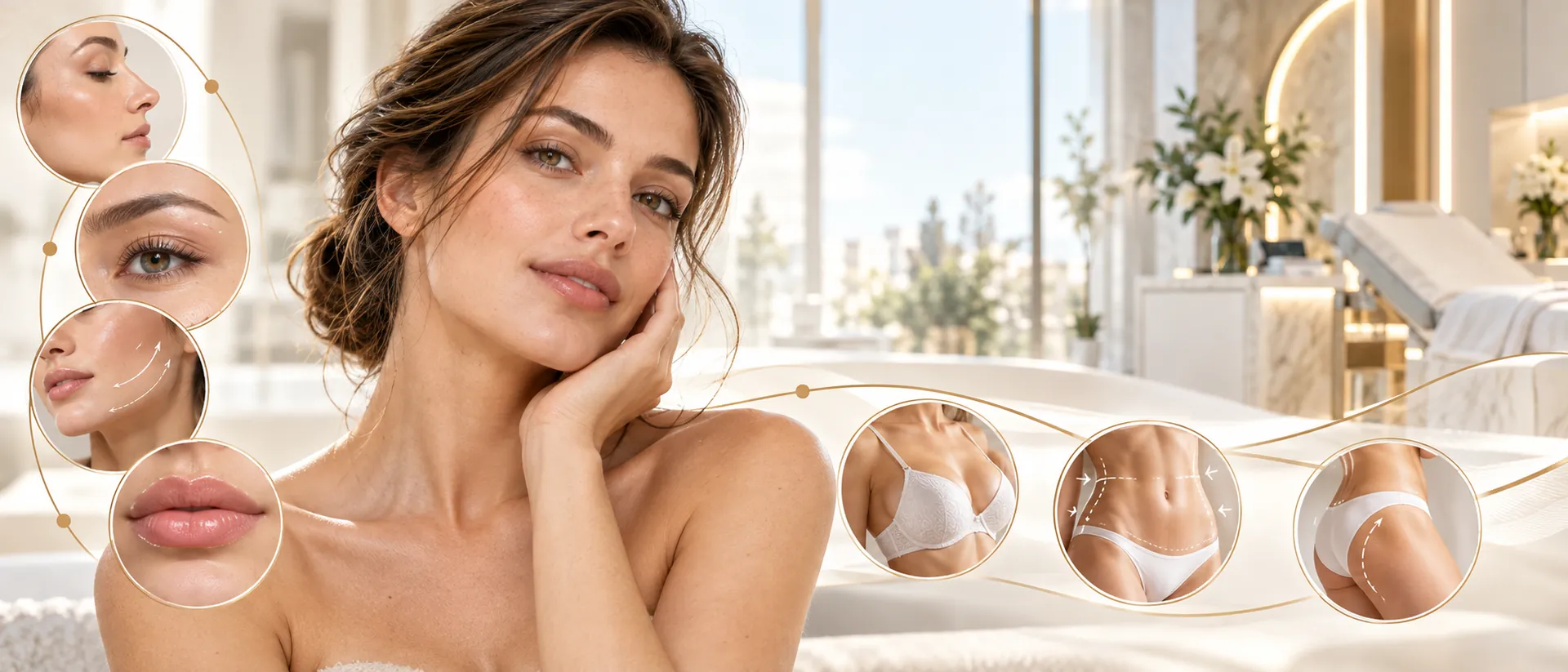
Fat transfer is versatile and can be used for small, precise changes or larger contouring. In the face, small amounts restore volume lost with age in the cheeks, temples and under the eyes, often giving a fresher look.
In the breasts, fat transfer gives a modest increase or corrects small differences between sides. In the buttocks and hips, it adds projection and softens hip dips, which is the basis of a Brazilian butt lift.
Fat can also be used to smooth dents or irregularities after previous liposuction. Each area has its own safety rules on technique and volume, which your surgeon explains during the consultation.
- Face: cheeks, temples, under-eye area
- Breasts: subtle volume, asymmetry correction
- Buttocks and hips: shape and projection
- Correction of liposuction irregularities
Risks and safety
Risks include swelling, bruising, uneven results, small lumps or oil cysts, infection and partial loss of the transferred fat. Fat injected into large areas, especially the buttocks, needs particular care to avoid entering blood vessels.
A doctor assesses your suitability in person, checks whether you have enough donor fat and explains realistic expectations.
Recovery timeline
- Day 1Swelling begins, short walks
- Week 1Check-up, bruising fading
- Week 2-3Most visible swelling settled
- Month 3Majority of reabsorption complete
- Month 6Stable, long-term result
Frequently asked questions
How much of the transferred fat survives?
Part of the fat is reabsorbed in the first few months, and the amount varies between people and areas. The fat that survives after about 6 months is usually stable.
Can fat transfer replace breast implants?
It can give a modest, natural increase of up to about one cup size. For a larger change, implants are usually more predictable.
What if I do not have much fat?
Very slim patients may not have enough fat to harvest for larger areas. Your surgeon will assess this during the consultation.
Is fat transfer permanent?
The fat that survives is permanent, but it changes with your weight like any other fat in the body.